Enjoying the Small Things

Enjoying the Small Things

  • ABOUT
    • KELLE HAMPTON + ETST BLOG
    • Our Down Syndrome Journey
    • Down Syndrome: Our Family Today
    • PRESS
  • the book
  • The Blog
    • Make Stuff
    • Family
    • Favorites
    • Parenting
    • Parties
    • Style
    • Travel
  • Once Upon A Summer PDF
  • Printables
  • CONTACT

The 5 Best Parenting Reminders I Picked Up in Therapy

April 12, 2018 By Kelle

Two years ago, we started seeing a family therapist to provide some test anxiety support. I quickly discovered how much I love having a therapist in our routine and how it benefits our entire family, so we continued our visits–sometimes spaced out quite a bit if we’re busy and comfortable, and sometimes arranged a little more frequently if it feels necessary to make some designated space for talking about our feelings. Our therapist’s office is roomy and cozy and has lots of toys, and with our busy schedule and responsibilities, sometimes sessions for us look like Dash and Nella playing with the doll house in the corner while Lainey and I sit on the couch (I’ve found having Nella and Dash there lightens things up and makes everyone more relaxed and open). We go less to address problems and more to make space for talking, and everything we take away is applicable to any of us and helpful for our entire family. Mostly, I do it because I recognize that my kids aren’t all outgoing and talkative like me, and when I talk about deep, emotional important things because I love talking about deep, emotional, important things, sometimes it can make an introvert shut down. Therapy for us is creating important space, another avenue for vital communication and connection as our kids grow up and deal with stresses and discovering who they are. Lately, it’s been a parenting refresher course, reminding me of all the things I know but sometimes forget. Our therapist is so skilled, insightful and loving in everything she shares, I’ve actually wiped tears listening to her talk, amazed at how she had the exact thing we needed to hear. I have taken away so many nuggets of parenting truth from these sessions, I thought today I’d share my five favorite ones.

Nothing is good because other people say it’s good.

I mean, I know this is something I need to teach and model for my kids–it’s a truth that’s changed my own recognition of my worth and willingness to pursue creative work–but it’s funny how my reactions in parenting situations don’t always mirror what I know to be true. Case in point: We were talking in therapy recently about a poem Lainey had written and showed me but didn’t think my “It’s beautiful–I love the creative personification you used here” represented a true 5-star review.

“You don’t like it, do you?” she said.

“So how did you answer?” our therapist asked me. I started laughing because I immediately recognized that what I said next suggested that the more people who think her work is good is what makes it good–and that’s okay because parents impulsively react all the time, and that doesn’t mean we are doing it “wrong.”

“I so badly wanted her to see how good it was, so I started naming all the people who were going to love it, calling Brett in to read it and tell her it was good, telling her she should show Poppa–he’s going to love it too.” I built up a case that maybe if we got enough people to give 5-star reviews, suddenly she’d believe her poem was good.

Our lovely therapist smiled and assured me that’s a completely normal reaction but suggested the following: “Maybe next time, put the reaction to the poem back on her. Ask her, “Do you love the poem? Because that’s all that matters. What did it feel like to write it? What do you love about it? And if she doesn’t like it, you can deal with that too–asking her why she doesn’t and making it better so she does love it.”

And of course I knew this deep in my bones, but that’s what I love about therapy. It’s such an open, forgiving, accepting place that brings all the reminders to the surface and sharpens what we know but forget to put in practice. Because of this little lesson, I’m much more aware of bringing satisfaction of my kids’ work back to their own feelings about creating it.

Shy people play powerful roles in our world, and their personalities are needed and important.

It was a simple lesson to kill comparison to all the kids with big outgoing personalities making very visible contributions at school.

“Can I tell you something?” our therapist said. “I have clients that come in my office who are very outgoing. They’re successful and funny and have no problem taking a stage or talking to groups, and everyone laughs at everything they say. But do you know what? So many of those people come in my office and sit on my couch and cry and tell me about problems in their life because they are lacking some of the amazing qualities of shy people. They want to be more like you. Do you know what shy people are good at? They see things other people don’t see. They’re observant, and they listen, and they’re okay with sitting back and quietly doing work. That’s such an amazing quality to have, and a lot of people could learn from it.”

This one conversation ignited a passion in me–to celebrate the beauty of quiet observant listening. It’s not something to work to grow out of. It is something to own and be proud of.

Don’t trap your kids for serious conversations.

This is especially great for the little introverts. I know as a kid, nothing made me want to shut down more than, “Come sit down, we’re going to talk about something important.” Having face-to-face sit-downs to talk about things that are uncomfortable can feel especially intimidating and stifling for some kids and can shut them down for future communication. Stealthily slipping these conversations in while you’re on a bike ride together or out moving in nature can help them feel more light-hearted and give kids something to do while you’re talking, creating more freedom for them to open up.  Another great tip our therapist gave us: let your child know that you’re setting the timer for five minutes when you do need one of those full-attention serious conversations. It creates an “out” and keeps you from getting locked in to an endless orbit over an issue that you need to move on from (parents can do this sometimes).

When your child is looking to you to fix something, it’s okay to create some space and take a break before you help.

As parents, we are often our kids’ one “person”–their safe place to bring all their fears, release their frustrations, get mad, demand help, cry, and look for solutions. That puts a lot of pressure on us, and unfortunately our mom hours of business are 24-7, no holidays, no weekends. When our kids are upset, it can heighten our own anxiety. So when there’s a crisis or a concern–even tears–and I feel myself taking on some of that heated energy and too anxious or upset to deal with the situation appropriately, here’s the therapy suggested response: Look at her, grab her hand, and say, “Listen. Everything’s going to be okay, alright? But I just need a short time-out before we deal with this. I’m going to go make a little space to regroup so I can be calm and really listen, and then we’ll talk about it. But I want you to know that everything’s going to be okay.” Those “everything’s going to be okay” bookends are powerful.

“The Sun Will Rise Again”

This has become the theme we return to in therapy, a mantra that started with our first appointment and has been incorporated in our home and conversations daily. We even made a poster for it in therapy, writing all the constant things in our life on the sun’s rays and the words “The Sun Will Rise Again” right in the middle of the sun. This mantra works for every problem, every anxiety, every situation–the assurance that no matter what happens, even if that thing you fear comes true--the sun will rise again. The world will not end, the people who love you will always love you, and if you fall, you will get up again. It’s been proven in our lives time and time again, so its validity is data-based. I love the way our therapist will humorously remind us of this in the most child-friendly way, bringing up times that Lainey “fell” or “failed” and asking questions about that time–“So, when you fell, were you still lying there two weeks later and people had to bring you food because you couldn’t get up, and everyone was like, “Did you see Lainey? She fell two weeks ago, and she just never got up. She’s still lying there.” This always makes Lainey laugh. And that laugh paves the way for worries to melt away.

Does anyone else have good parenting lessons or tips they’ve been reminded of in therapy? We go about once a month now, and while it’s not always convenient or “fun,” we always leave feeling more connected, strong and on course where we should be. With every appointment, I leave feeling like I just finished an inspiring parenting book.

*Note: While our therapy sessions are more of a family effort to create a space for good communication, right now Lainey is really the only child old enough to benefit from the things we’re talking about (although the littler ones beg to go because they love the office). The little part of her story in this post is shared with her permission.
Filed Under: Parenting, Uncategorized 46 Comments

8 Things I’ve Learned from Having a Child with Down Syndrome

March 20, 2018 By Kelle

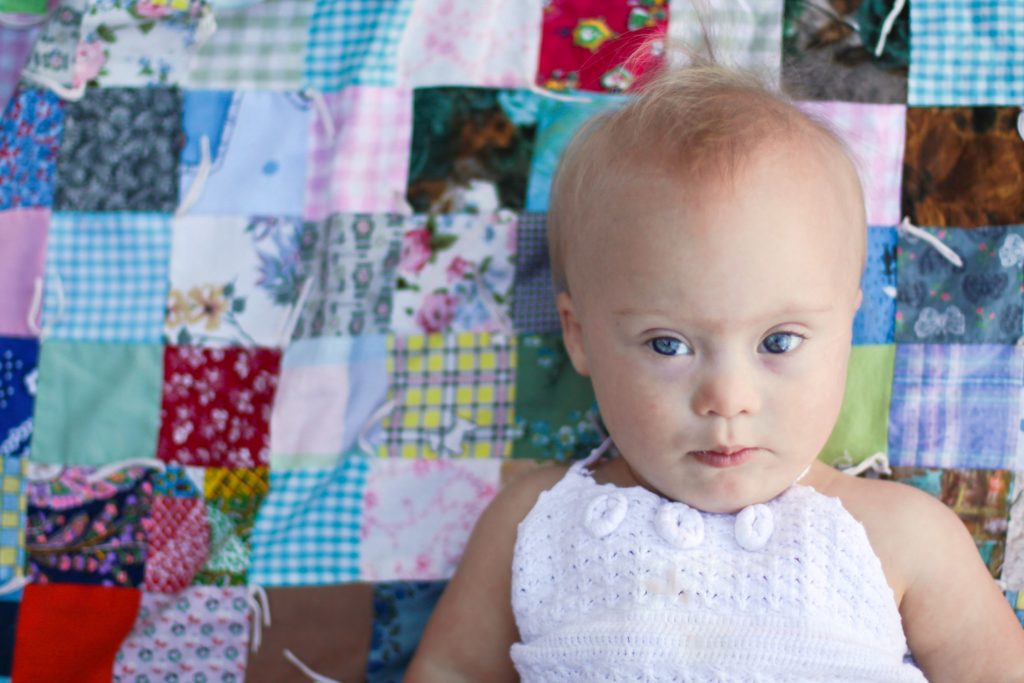
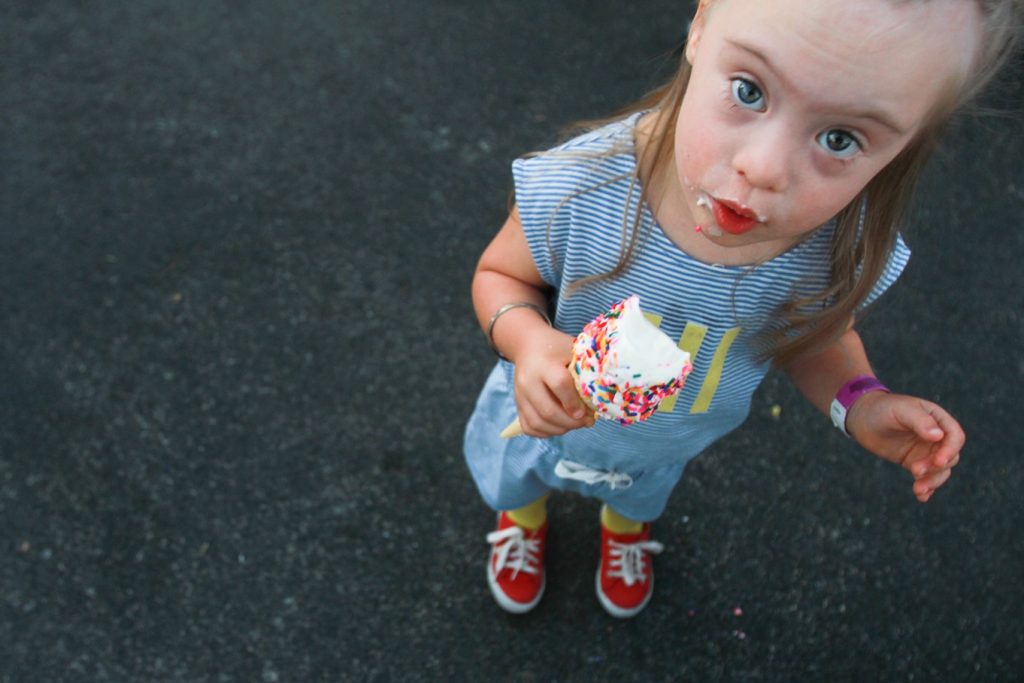
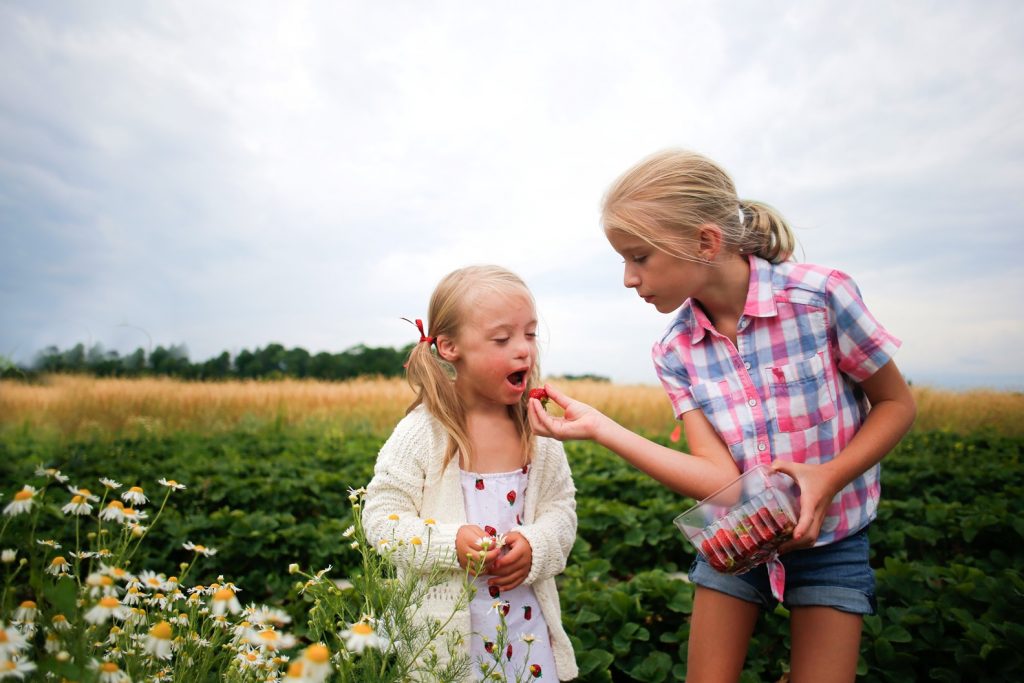
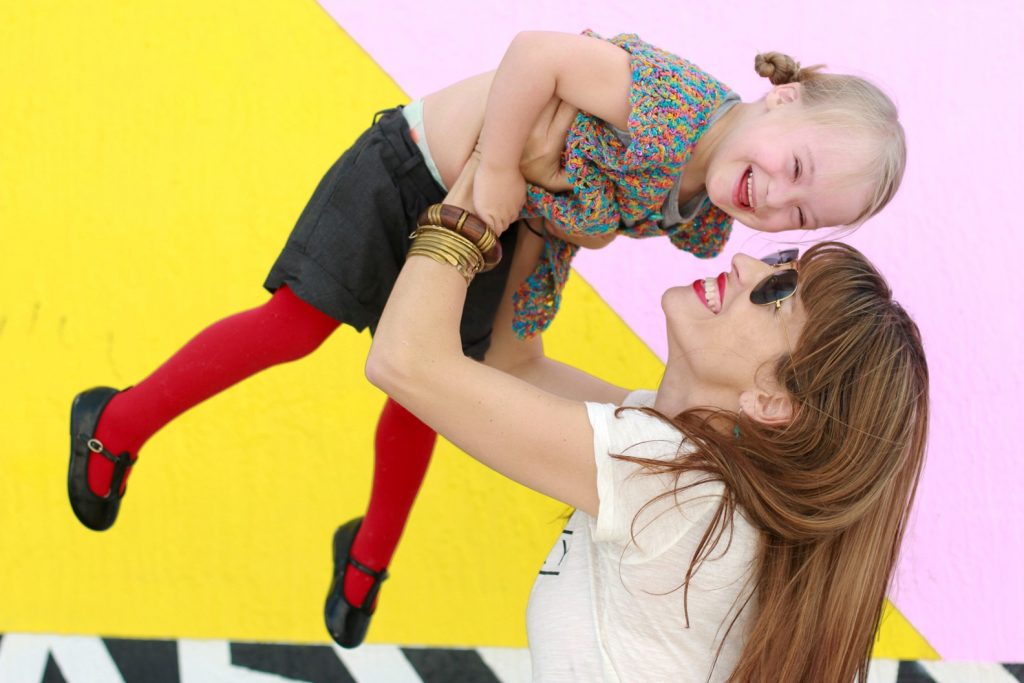
Tomorrow is World Down Syndrome Day, a day globally recognized (and officially observed by the United Nations) to raise awareness and celebrate individuals with Down syndrome and chosen on the 21st of the third month to represent three copies of the 21st chromosome. We cannot imagine life without Nella, and although we weren’t expecting that extra chromosome with her arrival eight years ago, we’ve learned so much about ourselves, the world around us and what really matters in life because of its presence in our family. In celebrating the lives of these incredible individuals on World Down Syndrome Day this year, here are 8 Things I’ve Learned from Having a Child With Down Syndrome.

#1: Life is hard. Just accept that.
So much of my devastation receiving Nella’s diagnosis was due to the fact that I got swept up in how comfortable and according-to-plan life was going that I expected it to stay on that path. We are not entitled to a life free of challenges, and clinging to a dream of ideal/easy/comfortable sets us up for incredible disappointment when the inevitable unexpected happens. In those first weeks after Nella was born, I read the words of Scott Peck and actually felt relieved—like I was given permission to stop fighting/grieving/analyzing what had happened and just accept that it was part of life. “Life is difficult,” he wrote. “Once we truly know that life is difficult—once we truly understand and accept it—then life is no longer difficult. Because once it is accepted, the fact that life is difficult no longer matters.” When I dream of the future now, I try to focus less on specifics I can’t control and more on the greater picture: I expect a life of love and fullness, and when I encounter the hard unexpected things in life, I will overcome them and use what I’ve learned to be better.

#2: Down syndrome isn’t what makes life hard.
Now that #1 is out of the way, here’s a surprise: That big life-changing diagnosis we thought would make life hard? Turns out the harder things in life have had little or nothing to do with Down syndrome. As for the future, we cannot be sad or stressed about a chapter that hasn’t even been written yet. And when it comes time to write that chapter, we will be ready. The tenth chapter of a math book looks entirely overwhelming on the first day of school, but when you arrive at it when you’re supposed to—after you’ve completed chapters 1 through 9—it’s just another math lesson.

#3: Love the child you were given.
Having Nella has helped me understand this more deeply for all of my kids. Our children will surprise us numerous times in their lives, both in ways that make us feel happy and proud and in ways that hurt and are hard to grasp (don’t worry—we did the same to our parents). But the child you get is the child you get. They might not like the sports you like or the clothes you pick out. They might not learn to read as fast as you did or take an interest in ballet like you had hoped. They might vote differently than you someday or join causes you don’t support. But we are going to have to let go of all of that, because we only have one job…to love them. More than anything, our children need overwhelming, no-strings-attached love as the unshakable foundation on which they will build and rebuild their experiences.

#4: There’s more to communication than words.
“What if I can’t understand my child?” is an overwhelming fear when, as a parent, you want nothing more than to deeply know your child and meet her needs. While Nella can speak very well now, her vocabulary developed at a slower rate, and her communication is different than her peers.  Through these past eight years, we’ve understood more how words are only a small part of communication. I have only felt the most intimate connection with Nella through her touch, her expressions, her behaviors, her humor, her tone and her heart. Her messages are intentional and meaningful, and we listen well when she communicates. And the best part? I’ve sharpened these communication skills and recognize and use them with people wherever I go now.

#5: Enough of the metrics!
At seven months, your baby should be combining syllables. Near 12 months, your baby will likely be practicing taking a few steps. Your toddler should be gripping a crayon now. Your kindergartener should know these sight words. Your third grader should pass this test. Your fifth grader should ace that test. Your high schooler should have this GPA. ENOUGH OF THE MARKERS AND METRICS FOR MEASURING A CHILD’S SUCCESS! Having Nella and celebrating the different ways and pace at which she learns has inspired us to let go of numbers, tests and comparisons for all of our kids and instead applaud interest, effort and expression. We put less weight on report cards and test data and focus more on communication with our teachers and evidence that shows our children are exploring the world, making art, pursuing interests, utilizing resources, fostering connections and contributing their unique gifts. Numbers can sometimes be a helpful tool to point out what our kids need, but will never be used to represent my children’s potential and value.

#6: Be a microphone for those whose voice needs more volume.
Having a daughter who is part of a group of people that have been marginalized in society for years has made me more aware of how I can use my voice and my vote for groups of people who don’t have the same opportunities as I do. Our family is more attentive to the needs of others. more sensitive in recognizing inequality and more motivated to support those who have to fight harder for things. Advocacy brings purpose to our lives and a greater connection in our community. Find causes to represent, find people to support, find friends who are marching for something and show up with a poster to march with them. You will be better for it. In the great words of Martin Luther King, Jr., “Life’s most persistent and urgent question is, ‘What are you doing for others?”

#7: YES YOU CAN.
My child works harder than anyone to accomplish things when the decks are stacked against her, and she proves again and again that she can do things that were once considered impossible accomplishments for kids with Down syndrome. This community is hearty and headstrong, and our advocate ancestors paved the road by refuting a whole lot of “Can’t”s with “Watch me”s. I’ve had lunch with a woman with Down syndrome who had just received her driver’s license, helped organize a dorm space for another who settled into college, and sipped wine with a mom who complained her son with Down syndrome never calls her anymore because he’s too busy socializing with his friends–all things that were unthinkable for people with Down syndrome 30 years ago. My daughter’s quality of life has drastically been made better because of three simple words: “Yes. She. Can.” Bonus: It works for moms too. Ever see a mom in a tough parenting situation and said to yourself, “I could never do that”? She probably thought that once too, and yet she’s doing it. Yes you can.

#8: Enjoy the Moment.
More than anything, raising a child with Down syndrome has taught me to sit back and enjoy the moments. So much of parenting is spent anticipating the next phase: When will he start walking? When will she write her name? When can I sign him up to play soccer? Each phase is quickly followed by another so that cherished moments flash by in a blur, and we often recognize how wonderful they were only once they are gone. We discovered early on that many of Nella’s phases last longer than usual. She didn’t walk until she was two, so we didn’t stress about the milestone and rather used her delay as an opportunity to sit back and soak up the smooshy baby phase–so many days of her snuggled in our arms or her head pressed against our chest all nestled in the baby carrier. And learning to read now? It’s so beautiful to watch it slowly unfold, and our entire family gets to be part of it, pulling out sight words games at dinner, pointing out letter sounds on signs, celebrating new word recognition with family cheers and clapping. Time has slowed down for the very best things in life, giving us the chance to recognize that these moments–this learning about the world–is what life’s all about, and it’s something to be savored and celebrated.

We are thrilled to celebrate unique abilities this week and are so grateful for our girl and the vibrant contribution she is making to our family, our community and this world that needs more colorful variety and compassion. If you love someone with Down syndrome and want to share what you’ve learned from them, leave a note in the comments. 

Filed Under: Down Syndrome, Parenting Tagged With: Down syndrome 55 Comments

If You Fall, We Fall, We All Fall Together

February 7, 2018 By Kelle

This story is shared with Lainey’s permission, with a little time and space between when it happened and when it was written to preserve what’s special and to protect what’s tender. 

“Fifth grade is when it starts,” everyone told me, with eye rolls and heavy sighs. “The Drama. The Mean Girls. Those girls, man.”

So, I braced myself for what Lainey would face. Fifth grade was my last year of public school before my mom pulled us out to home school, so I don’t have very many memories of drama and girl fights, unless you count that girl in my church home school group who raised her hand all “Pick Me! Pick Me!” to read the Crucifixion story aloud for Easter service when she knew I wanted to read it. (#churchkidprobs) But that’s as good as it gets.

I know my girl is confident and cool, and I trust she has all the tools to deal with relationship issues with girls if they arise, but also: Circle of Trust eyes to all children in my path as I walk her to class in the morning.

What I’ve discovered this year though, is that the exact kind of girls I want my kids to be friends with–the kind ones, the strong ones, the kids who lift up rather than tear down–they’re out there. And this year, it was fifth grade girls who reminded me one of the most important lessons that sums up what a good friend should be.

To begin, let me explain a little something about our family: We’re not that sporty. We’re artists and writers and music lovers. Give us a creative writing essay, a visual aid for a science project, a costume assignment for a social studies character, and we will take it home. But sports? We’re only in it for the cool tennis shoes and the cute jerseys. As my dad recalls from his junior high basketball memories, “I just hoped the coach wouldn’t put me in. When he did, I prayed no one would pass the ball to me.” (See also, his cross country recollection: “I threw up a lot and crossed the finish line when they were folding up tables and track mates were already on the bus.”)

Not that we don’t hold out hope. When Dash was born, I remember my dad cradling him in the hospital room and saying, “I can already hear the announcer…’And Dash Hampton makes the winning touchdown!’ It’s a strong name for a football player…”

(three second pause before he continues)

“But just so you know, I can also hear, ‘And the first runner-up for the flower arranging contest goes to...Dashel Hampton!’” We all laughed.

“Either way, we love him and root for him, Dad. He’s going to do awesome things.”

All this to say, much like me, Lainey’s idea of hell is Field Day, the one day a year when the school dedicates an entire day to sports and competition, and students rotate through various sporting events representing their class as a team.

While some kids see this day as “FUN! FUN! FUN!”, my kid views it as “DEAR GOD, NO, THE PRESSURE.” Which, if you’ve ever been a fifth grader running the last leg of the relay race with twenty classmates watching and screaming “GO! GO! YOU’RE BEHIND! WE’RE GOING TO LOSE! RUN FASTER!,” you get it. It happened to me back in the day, and I wanted to throw the damn baton in their faces and scream, “It’s a fifth grade relay race, assholes, not the Super Bowl.” And then there was Brian Mueller who dramatically kicked the cone when I lost and huffed, “Because of YOU.” So, I totally get it, Lainey.

This awareness of sports not being “her thing” along with the pressure of performing and the fear of losing or falling or not being fast enough has made Field Day one of the most dreaded days of the year. So that morning in our house for the past several years has been spent encouraging “We can do hard things” and reminding her that it’s more about having fun and showing up for her team and not at all about winning or being fast. And as I push her out the door, I hope the kids in her class will do the same.

I knew it wouldn’t be an easy day for her, but I quickly forgot about Field Day after I dropped Lainey off this year until later in the afternoon when I got a text from one of her teachers.

“You would be teary-eyed if you saw what just happened on the field.” A picture came through of Lainey–all smiles–with a huge huddle of fifth-grade girls around her.

“She didn’t want to do the potato sack race,” the text continued, “She was afraid she would fall, but the girls got around her and started pumping her up. They were chanting–”

(and here’s where I lost it)

“If you fall, we fall, we all fall together.”

My girl who was so stressed about being the team mate who might disappoint, the one to hold back her friends from winning, was surrounded by girls who were telling her they didn’t care about winning as much as they cared about her.

That’s it, right there–the nugget of truth that will make girl relationships as beautiful as they can be, the guide to good friendships, the key to building and keeping a tight-knit community: When you rise, we rise. When you fall, we all fall.  

They assured her that if she fell, she wouldn’t fall alone. They wouldn’t run off without her or make her feel bad for falling…they’d fall with her. This is what girls want, and the desire only gets stronger as we get older–to feel freedom to reveal our weaknesses and have them embraced and strengthened rather than judged, and to succeed from hard work and using our talents and be able to share our celebration with friends because our win is a win for all.

This year, I have been continually impressed by the beauty, love and support of fifth grade girls and the way they celebrate each other when one succeeds and help each other when one needs support. And I’m so proud to be able to use our own friends as examples as I teach my girls about strong women and the power we have to build community.

 photo print 15_zpsjv4vmktz.jpg

The afternoon I picked up Lainey from Field Day, I could not stop smiling as I texted her teacher: “You’re never going to believe what Lainey just told me…on Field Day:

‘Today was the best day ever, Mom.'”

P.S. And guess who just decided she loves tennis? Her Hampton genes are pulling through.

Filed Under: Parenting, Uncategorized 38 Comments

  • « Previous Page
  • 1
  • …
  • 3
  • 4
  • 5
  • 6
  • 7
  • …
  • 21
  • Next Page »
  • Facebook
  • Instagram
  • Pinterest
  • RSS
  • Twitter

Popular Posts

Shop My Favorites

Keep In Touch

Bucket Lists

ARCHIVES

Archives


“One of the most emotionally stirring books I’ve ever read….a reminder that a mother’s love for her child is a powerful, eternal, unshakable force.”
Ree Drummond, The Pioneer Woman
  • Home
  • About this Blog
  • BLOG
  • BLOOM
  • Favorites
  • Parties
  • PRESS
  • CONTACT

Copyright © 2026 · Kelle Hampton & Enjoying the Small Things · All Rights Reserved